
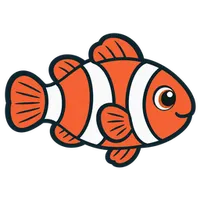
The ocellaris clownfish (Amphiprion ocellaris) is the hardy, captive-bred “Nemo” — and genuinely the best first saltwater fish there is. One fish or a bonded pair is happy in a stable tank of about 20 gallons at 75–82°F, eats almost anything, is fully reef-safe, and — despite the movie — does not need an anemone to thrive. Buy captive-bred, keep the water steady, and you have a fish that can live 10+ years.
“In the aquarium… the relationship is unnecessary, and while clownfish represent just about the hardiest, easiest-to-keep animals, anemone are tricky even for extremely advanced aquarists. In addition, captive-bred clowns — the only ones you should consider — may not successfully recognize and adapt to a host anemone.”
Care at a glance
| Adult size | About 3–3.5 in (7.6–9 cm); up to ~4 in (10 cm). Females are noticeably larger. |
|---|---|
| Lifespan | A long-term commitment — 10+ years, and 15+ with excellent, stable care. |
| Minimum tank | ~15–20 gallons for one or a bonded pair; 30+ gallons for a reef (sources differ — BRS lists 15 gal, TFH recommends 30+). Bigger, more stable water is more forgiving for a new keeper. |
| Temperature | 75–82°F (24–28°C). |
| pH | 8.1–8.4. |
| Specific gravity | 1.020–1.025. |
| Other targets | Nitrate under ~20 ppm; stable salinity matters more than a perfect number. |
| Diet | Omnivore — a quality marine pellet or flake as the staple, plus frozen mysis and brine shrimp. Small amounts 2–3 times a day; remove uneaten food. |
| Temperament | Hardy and generally peaceful in a community — but territorial toward other clownfish, including its own kind. |
| Reef-safe | Yes — safe with soft, LPS and SPS corals and with inverts. One reason it's the classic first reef fish. |
| Natural range | Indo-Pacific — eastern Indian Ocean through Australasia (Thailand, Malaysia, Singapore, Indonesia, the Philippines, Taiwan, NW Australia), north to southern Japan. |

The fish store gets these wrong
Common myths, kindly corrected — no shame for having believed them.
- “Clownfish need an anemone.” They don't. Captive-bred ocellaris live full, healthy lives with no anemone — they'll happily adopt a coral, a powerhead, or nothing at all. Anemones need a mature, bright, stable tank and are an advanced add-on, not a clownfish requirement.
- “Isn't there a freshwater clownfish?” No. Clownfish are marine — ocellaris need a saltwater aquarium. Anything sold as a “freshwater clownfish” is an unrelated fish.
- “Any two clownfish will pair up.” Two small captive-bred juveniles added together usually do (the larger becomes the female). But adding a second adult later, or mixing clownfish species, often ends in serious aggression. Pair them young, or keep a single.
Before you buy
- Buy captive-bred. Hardier, already eating prepared food, better adjusted to aquarium life — and it spares wild reefs. Ocellaris are one of the most widely captive-bred marine fish.
- Cycle the tank first. A clownfish is not a “cycling fish” — the tank should be fully cycled with stable salinity before it goes in.
- Decide one or a young pair up front, so you're not trying to add a second adult later.
- Skip the anemone at the start. Get the clownfish thriving in a stable tank long before you consider a light-hungry anemone.
Quarantine and get help if…
We can't diagnose from a photo — but these are the signs to stop watching, quarantine, and get an aquatic vet or an experienced reefer's eyes on it:
- White spots like grains of salt, or rapid gill-breathing, flashing and scratching (possible ich or velvet — velvet moves fast, so act quickly).
- A cloudy film or patches on the skin, clamped fins, or hanging at the surface gasping.
- Refusing food for more than a day or two, or an obviously hollow, sunken belly.
- Any new fish added without quarantine — the single most common way disease enters a tank.
Print the Ocellaris Clownfish emergency vet-prep card — what to bring, what to tell the vet, and the questions to ask.
Never
- Never add a clownfish to an uncycled tank.
- Never use copper-based medications in a reef tank or around inverts.
- Never assume an anemone is required — or add one to an immature tank.
- Never put two adult clownfish (or two different clownfish species) together hoping they'll pair.
Common ocellaris clownfish questions
Do ocellaris clownfish need an anemone?
No. Captive-bred ocellaris thrive with no anemone at all — they'll host a coral, a powerhead, or nothing. Anemones need a mature, high-light, stable tank, so treat one as an advanced extra, never a requirement for a healthy clownfish.
What size tank do ocellaris clownfish need?
One fish or a bonded pair is happy in a stable tank of about 20 gallons; 15 gallons is a workable minimum and 30+ gives room to grow into a reef. Bigger water is more stable and more forgiving for a new keeper (BRS lists 15 gal, TFH recommends 30+).
Are ocellaris clownfish reef-safe?
Yes. They won't nip corals or inverts and are safe with soft, LPS and SPS corals — one reason they're the classic first reef fish.
How long do ocellaris clownfish live?
A long time — 10+ years is normal, and 15+ is possible with good, stable care. They're a genuine long-term commitment, not a throwaway starter fish.
Can I keep two clownfish together?
Best as two small captive-bred juveniles added together — the larger becomes female and they pair. Adding a second adult, or mixing clownfish species, often ends in serious aggression. Pair young, or keep a single.
Are clownfish freshwater or saltwater?
Saltwater (marine). Ocellaris need a saltwater aquarium — there is no true freshwater clownfish.
🐚 Did you know? — Ocellaris Clownfish fun facts
Little true delights about the ocellaris clownfish — each one checked against a named source, no reef-store folklore.
- Every ocellaris clownfish is born male, and the biggest fish in the group can switch sex to become the dominant female for life. Wikipedia
- The layer of mucus coating a clownfish protects it from the anemone's stinging tentacles, letting it shelter safely inside a home that would harm other fish. Wikipedia
- An ocellaris clownfish lives in a strict pecking order inside its anemone, where an established hierarchy keeps each fish at a specific social rank. Wikipedia
Sources & further reading
This guide was written and fact-checked against these authorities. It's honest, general guidance — not a diagnosis, and not a substitute for an aquatic vet or your own test kit:
- Bulk Reef Supply — How To Care For Clownfish — tank size, temperature, pH, salinity, nitrate, diet, temperament, reef-safe, captive-bred
- Tropical Fish Hobbyist Magazine — Amphiprion ocellaris — adult size, natural range, aquarium size, temperament, reef-safe
- Saltwater Aquarium Blog — Ocellaris Clownfish Care — lifespan, adult size
- WoRMS — Amphiprion ocellaris (Cuvier, 1830) — accepted scientific name & taxonomy
Written and fact-checked by The Coralkin Team against marine-aquarist and veterinary sources — if your ocellaris clownfish shows a red-flag sign above, quarantine and get an aquatic vet or an experienced reefer's eyes on it. We never guess a care number.
🔬 Review status: team-written and fact-checked against cited sources · not yet reviewed by a marine vet. How we research & fact-check →
Get the free Clownfish Starter Kit
A one-page setup checklist and a first-30-days plan for your first clownfish — including the truth the movie skips: no anemone required. Join the shoal and we’ll send it over.
Honest reef care straight to your inbox. No spam — unsubscribe anytime. See how we handle your data in our privacy notice.