
Livestock · Tangs & Surgeonfish
Yellow Tang
Zebrasoma flavescens
The iconic reef yellow — an active grazer that needs real swimming length.
Difficulty: Beginner–Intermediate Tang / surgeonfish Reef-safe
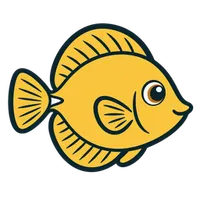
The yellow tang (Zebrasoma flavescens) is the iconic reef yellow — an active, algae-grazing surgeonfish that's genuinely rewarding, but a real step up from the beginner fish. It needs a big tank with swimming length, a seaweed-heavy diet, and strict quarantine (tangs are ich magnets). Buy captive-bred: it's hardier, and it spares wild Hawaiian reefs.
Care at a glance
| Adult size | Large — about 8 in (20–21 cm). |
|---|---|
| Lifespan | A long-term commitment — up to ~10 years in the aquarium. |
| Minimum tank | 90–100+ gallons with about 6 ft of open swimming length. This is NOT a small-tank fish — swimming room is a welfare need, not a luxury. |
| Temperature | 75–82°F (24–28°C). |
| pH | 8.1–8.4. |
| Specific gravity | 1.020–1.026 (≈35 ppt; keep it stable). |
| Other targets | Lots of open swimming space plus rockwork with algae to graze; keep nitrate low. |
| Diet | Herbivore — the staple is marine algae: dried nori/seaweed on a veggie clip, plus spirulina or algae pellets, offered daily (at least 3× a week). It'll take some meaty foods (mysis, brine), but a veggie-rich diet is what keeps its colour, immune system and temper in check. |
| Temperament | Generally peaceful with non-tangs, but territorial toward other tangs/surgeonfish — as a rule, one tang per tank (a group only in a very large tank, added together as juveniles). It has a scalpel-sharp spine at the tail base — handle with care. |
| Reef-safe | Yes — it grazes algae, not corals (it may bump corals while foraging). |
| Natural range | Hawaiian and wider Pacific reefs. |

The fish store gets these wrong
Common myths, kindly corrected — no shame for having believed them.
- “A yellow tang is fine in a 55 (or a nano).” No — it reaches ~8 in and needs ~6 ft of swimming length; a cramped tang gets stressed, aggressive and ich-prone. Plan 90–100+ gallons.
- “Just drop it in the display.” Please don't — tangs are notorious ich magnets, especially wild-caught. Quarantine every new tang before it touches your display.
- “Feed it like the other fish.” It's a herbivore — it needs marine algae/nori as the staple, not a meaty diet, for its health and to keep aggression down.
Before you buy
- Have a big enough tank first (90–100+ gal, ~6 ft of length).
- Buy captive-bred (e.g. Biota) — hardier, disease-resistant, and it spares wild Hawaiian reefs.
- Set up quarantine — non-negotiable for a tang.
- Have nori/seaweed and a veggie clip ready.
- One tang per tank (unless it's a very large system).
Quarantine and get help if…
We can't diagnose from a photo — but these are the signs to stop watching, quarantine, and get an aquatic vet or an experienced reefer's eyes on it:
- White salt-grain spots (classic marine ich — tangs are highly prone), flashing/scratching on rocks, or rapid gill-breathing.
- A fine dusty/velvety sheen with very rapid breathing (velvet — it moves fast, act immediately).
- Clamped fins, hiding, refusing food, or a pinched belly / darkening colour.
- Any new fish — especially a tang — added without quarantine.
Print the Yellow Tang emergency vet-prep card — what to bring, what to tell the vet, and the questions to ask.
Never
- Never keep a yellow tang in an undersized tank — it needs swimming length.
- Never skip quarantine on a tang.
- Never rely on meaty foods alone — it's a herbivore.
- Never keep multiple tangs in an average tank.
- Never add it to an uncycled tank.
Common yellow tang questions
What size tank does a yellow tang need?
A big one — 90–100+ gallons with roughly 6 feet of open swimming length. Yellow tangs reach about 8 inches and are constant swimmers, so a cramped tank leads to stress, aggression and ich. It's not a nano or 55-gallon fish.
Why do yellow tangs get ich, and are they hard to keep?
They're hardy once settled, but tangs are famous “ich magnets,” especially wild-caught fish. The fix is strict quarantine of every new tang before it enters your display, plus low stress (a big tank) and a strong algae-based diet.
What do yellow tangs eat?
They're herbivores — the staple is marine algae: dried nori/seaweed on a clip, spirulina and algae pellets, offered daily. They'll take some meaty foods too, but veggies keep their colour, health and temper.
Can I keep two yellow tangs together?
Usually not. Tangs are territorial toward each other — the rule is one tang per tank, unless you have a very large system and add them together as juveniles.
Should I buy a captive-bred yellow tang?
Yes. Captive-bred yellow tangs (available since 2016) are hardier, more disease-resistant and already eating prepared foods — and they spare wild Hawaiian reef populations.
🐚 Did you know? — Yellow Tang fun facts
Little true delights about the yellow tang — each one checked against a named source, no reef-store folklore.
- In the wild, yellow tangs can live for over 40 years. Wikipedia
- At night a yellow tang's brilliant colour fades and a brownish patch with a white band appears, then it rapidly turns bright yellow again at daybreak. Wikipedia
- Yellow tangs offer cleaning services to sea turtles, nibbling algae growth off their shells. Wikipedia
Sources & further reading
This guide was written and fact-checked against these authorities. It's honest, general guidance — not a diagnosis, and not a substitute for an aquatic vet or your own test kit:
- Saltwater Aquarium Blog — Yellow Tang Care Guide — adult size, lifespan, tank & swimming length, diet, temperament, reef-safe, ich, captive-bred, range
- LiveAquaria — Yellow Tangs Remain a Great Choice — tank size (100 gal), algae diet, tang aggression, captive-bred hardiness
Written and fact-checked by The Coralkin Team against marine-aquarist and veterinary sources — if your yellow tang shows a red-flag sign above, quarantine and get an aquatic vet or an experienced reefer's eyes on it. We never guess a care number.
🔬 Review status: team-written and fact-checked against cited sources · not yet reviewed by a marine vet. How we research & fact-check →
Get the free Yellow Tang Starter Kit
A readiness checklist and a first-30-days plan to set up your yellow tang the right way — every number drawn straight from our fact-checked care sheet. Join the shoal and we’ll send it over.
Honest reef care straight to your inbox. No spam — unsubscribe anytime. See how we handle your data in our privacy notice.