
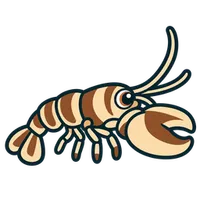
The tiger pistol shrimp (Alpheus bellulus) is one half of the reef's most charming partnership. Nearly blind, it digs and constantly maintains a burrow in the sand; in return, a watchman goby stands guard at the entrance and warns it of danger with a flick of its tail. The famous "snap" — loud enough to startle you — is the shrimp's spring-loaded claw, used mostly for defence.
Care at a glance
| Adult size | Around 2 in. |
|---|---|
| Minimum tank | 20+ gallons with a sand bed deep enough to burrow, plus rubble to build with. |
| Temperature | 75–82°F (24–28°C). |
| pH | 8.1–8.4. |
| Specific gravity | 1.023–1.026 (reef-standard ≈35 ppt). |
| Other targets | Standard reef calcium and alkalinity support healthy moulting; like all inverts it has zero tolerance for copper. |
| Diet | Scavenger — detritus, leftover food and meaty scraps gathered near its burrow. |
| Temperament | Peaceful and reef-safe; reclusive. Famous for pairing with a shrimp goby (such as the yellow watchman). |
| Reef-safe | Yes — it stays in and around its burrow; the snapping is defensive, not predatory. |
| Natural range | Indo-Pacific. |

The fish store gets these wrong
Common myths, kindly corrected — no shame for having believed them.
- "A pistol shrimp will crack my glass or kill my fish." No — the snap is a defensive stun and is no danger to your tank glass or your fish; it's a reclusive scavenger.
- "It needs the goby to survive." The partnership is optional for the shrimp — but pairing it with a watchman goby is the whole appeal, and both do better for it.
Before you buy
- A sand bed deep enough to burrow, plus rubble or shell for tunnel-building.
- Ideally a shrimp goby (yellow watchman) to pair it with.
- A cycled tank; drip-acclimate; never any copper. Expect to rarely see it at first.
Signs something's wrong
A struggling invert is usually telling you about water quality, acclimation, or (for shrimp and crabs) a fresh moult — here's what to watch for:
- Never leaving the burrow or not eating — make sure food reaches near the entrance; check parameters.
- On its side and not a moult — check salinity and for copper.
Work through the Tiger Pistol Shrimp trouble card — the water, light, flow and pest checks that fix almost every struggling invert.
Never
- Never keep it bare-bottom — it needs sand to burrow.
- Never dose copper with shrimp in the tank.
- Never drop it straight in — drip-acclimate.
Common tiger pistol shrimp questions
Do pistol shrimp and gobies really pair up?
Yes — it's a genuine symbiosis. The near-blind pistol shrimp digs and maintains a burrow, and a shrimp goby (like the yellow watchman) shares it and stands guard, warning the shrimp of danger with its tail. Buy them together, or add the shrimp first.
Is a pistol shrimp's snap dangerous?
Not to you or your tank — the snap is a spring-loaded claw used mainly for defence. It's loud (you'll hear clicks), but it won't crack aquarium glass or harm your fish; the shrimp is a reclusive scavenger.
Is the tiger pistol shrimp reef-safe?
Yes — it stays in and around its sand burrow eating detritus and scraps, and leaves corals alone. Keep it fed so it has no reason to hunt.
Does a pistol shrimp need a sand bed?
Yes — it's a burrower, so it needs a sand bed deep enough to dig in, ideally with some rubble or shell pieces to shore up its tunnels.
Will I ever see my pistol shrimp?
Sometimes — it's a burrow-dweller, so you'll mostly see it at the entrance shifting sand, especially if it's paired with a goby standing guard. Hearing the occasional snap is normal even when it's hidden.
🐚 Did you know? — Tiger Pistol Shrimp fun facts
Little true delights about the tiger pistol shrimp — each one checked against a named source, no reef-store folklore.
- The tiger pistol shrimp snaps its oversized claw so fast it fires a jet of water forming a collapsing cavitation bubble, and that collapse even emits a brief flash of light too faint for our eyes to see. Wikipedia
- The collapsing bubble from a snapping shrimp's claw briefly reaches thousands of degrees, hot enough that the light it gives off would require a temperature rivalling the surface of the Sun. Wikipedia
- The nearly blind tiger pistol shrimp shares its burrow with a goby fish in a classic partnership: the shrimp does the digging while the goby stands guard and warns of danger the shrimp cannot see. Wikipedia
Sources & further reading
This guide was written and fact-checked against these authorities. It's honest, general guidance — not a diagnosis, and not a substitute for an aquatic vet or your own test kit:
- Saltwater Aquarium Blog — Best Reef Safe Shrimp — reef-safe, goby symbiosis, snapping
- Petco — Marine Shrimp Care Sheet — pistol/goby pairing, tank, diet
Written and fact-checked by The Coralkin Team against marine-aquarist sources — if your tiger pistol shrimp is struggling, it's almost always water quality, acclimation or a moult — check those first and ask an experienced reefer. We never guess a care number.
🔬 Review status: team-written and fact-checked against cited sources · not yet reviewed by a marine vet. How we research & fact-check →
Get the free Tiger Pistol Shrimp Starter Kit
A readiness checklist and a first-30-days plan to set up your tiger pistol shrimp the right way — every number drawn straight from our fact-checked care sheet. Join the shoal and we’ll send it over.
Honest reef care straight to your inbox. No spam — unsubscribe anytime. See how we handle your data in our privacy notice.