
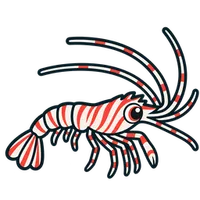
The peppermint shrimp (Lysmata wurdemanni) is the reef hobby's natural answer to Aiptasia — the pest anemones that spread and sting corals. A small group will often clear them out. Two honest caveats keep it from being a magic bullet: “peppermint shrimp” covers several look-alike species (and the coral-nipping camel shrimp is frequently mis-sold as one), and even the real thing is an individual — not every shrimp reliably eats Aiptasia, and a hungry one may nibble soft-coral polyps.
Care at a glance
| Adult size | ≈1.5–2 in. |
|---|---|
| Minimum tank | 10 gallons. |
| Temperature | 75–82°F (24–28°C). |
| pH | 8.1–8.4. |
| Specific gravity | 1.023–1.026 (reef-standard ≈35 ppt). |
| Other targets | Standard reef calcium and alkalinity support healthy moulting; like all inverts it has zero tolerance for copper. |
| Diet | Scavenger/omnivore — eats detritus and meaty foods, and (the true peppermints) nuisance Aiptasia anemones. Nocturnal; feeds at night. |
| Temperament | Peaceful, shy and nocturnal — hides by day. Add a small group (not one) for Aiptasia control. |
| Reef-safe | Mostly — the true peppermint is reef-safe but may nibble soft-coral polyps if underfed; see the ID caveat. |
| Natural range | Western Atlantic / Caribbean. |

The fish store gets these wrong
Common myths, kindly corrected — no shame for having believed them.
- “Any ‘peppermint shrimp' will clear Aiptasia.” Not reliably — several look-alike species are sold under the name, and the humped-backed camel shrimp (which actually nips corals) is often mis-sold as one. ID matters.
- “One peppermint shrimp will fix an Aiptasia outbreak.” It's individual and dose-dependent — add a small group, and keep them a little hungry so Aiptasia stays on the menu.
- “They're 100% reef-safe.” The true peppermint is largely reef-safe but can nibble soft-coral polyps, especially if underfed. Keep them fed.
Before you buy
- Buy from a seller who can tell a true peppermint from a camel shrimp (humped back + pointed snout = camel — avoid).
- Add a small group, not a single shrimp, for Aiptasia control.
- A stable, cycled tank — drip-acclimate slowly; never any copper.
- Keep them fed so they don't turn to your soft corals.
Signs something's wrong
A struggling invert is usually telling you about water quality, acclimation, or (for shrimp and crabs) a fresh moult — here's what to watch for:
- Visibly nipping or irritating soft corals — usually underfed; feed more and watch.
- Not touching Aiptasia at all — you may have a look-alike species, or they're too well-fed on other food.
- On its side and not a shed shell — check salinity and for any copper in the tank.
Work through the Peppermint Shrimp trouble card — the water, light, flow and pest checks that fix almost every struggling invert.
Never
- Never dose copper-based medications in a tank with shrimp — it's lethal.
- Never assume a “peppermint” is the real thing — camel shrimp nip corals and are often mis-sold.
- Never rely on one shrimp for an Aiptasia problem — add a small group.
- Never drop it straight in — drip-acclimate (salinity shock kills inverts).
Common peppermint shrimp questions
Do peppermint shrimp really eat Aiptasia?
Often, yes — the true peppermint (Lysmata wurdemanni and close relatives) is the hobby's natural Aiptasia control, and a small group will frequently clear an outbreak. But it's not guaranteed per shrimp, and keeping them a little hungry helps keep Aiptasia on the menu.
How do I tell a real peppermint shrimp from a camel shrimp?
The camel shrimp (Rhynchocinetes) has a distinctly humped/arched back and a pointed, upturned snout — and it nips corals. True peppermints have a straighter body with fine red stripes. Because the two are frequently confused at stores, buy from a seller who knows the difference.
Are peppermint shrimp reef-safe?
The true peppermint is largely reef-safe, but it can nibble soft-coral polyps — especially if it's underfed. Keep it fed. (The mis-sold camel shrimp, by contrast, is not reef-safe.)
How many peppermint shrimp do I need for Aiptasia?
Add a small group rather than a single shrimp — it makes control far more reliable. A common starting point is a few shrimp for a moderate outbreak, then watch and adjust.
Are peppermint shrimp active during the day?
No — they're shy and nocturnal, hiding in the rockwork by day and coming out to feed at night. That's normal; you'll often only see them at lights-out or feeding time.
🐚 Did you know? — Peppermint Shrimp fun facts
Little true delights about the peppermint shrimp — each one checked against a named source, no reef-store folklore.
- A peppermint shrimp starts life as a male and later becomes a hermaphrodite, acting as a male between moults and as a female in the brief window right after moulting. Wikipedia
- Male peppermint shrimp find mates by smell, using scent organs on their antennae to pick up the pheromones a female releases into the water a few hours before she moults. Wikipedia
Sources & further reading
This guide was written and fact-checked against these authorities. It's honest, general guidance — not a diagnosis, and not a substitute for an aquatic vet or your own test kit:
- Saltwater Aquarium Blog — Peppermint Shrimp Care Guide — diet, size, reef-safe, Aiptasia
- AlgaeBarn — Peppermint Shrimp & Aiptasia Control — species ID nuance (L. wurdemanni / boggessi), Aiptasia reliability
- Shrimp and Snail Breeder — Peppermint Shrimp Detailed Guide — care, diet, nocturnal behaviour
Written and fact-checked by The Coralkin Team against marine-aquarist sources — if your peppermint shrimp is struggling, it's almost always water quality, acclimation or a moult — check those first and ask an experienced reefer. We never guess a care number.
🔬 Review status: team-written and fact-checked against cited sources · not yet reviewed by a marine vet. How we research & fact-check →
Get the free Peppermint Shrimp Starter Kit
A readiness checklist and a first-30-days plan to set up your peppermint shrimp the right way — every number drawn straight from our fact-checked care sheet. Join the shoal and we’ll send it over.
Honest reef care straight to your inbox. No spam — unsubscribe anytime. See how we handle your data in our privacy notice.