
Neon Goby
Elacatinus oceanops
The tiny cleaner goby — captive-bred, nano-friendly, and it picks parasites off your other fish.
Difficulty: Beginner Reef-safe community fish Reef-safe
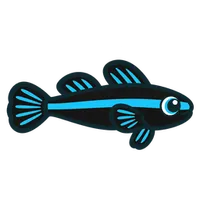
The neon goby (Elacatinus oceanops) is a tiny Caribbean cleaner with an electric-blue racing stripe — barely two inches long, but it sets up a cleaning station and picks parasites off fish many times its size. It's captive-bred, cheap, peaceful and perfect for a nano reef. The one honest note is its short life: even well kept, neon gobies typically live only a couple of years.
Care at a glance
| Adult size | ~2 in (6 cm). |
|---|---|
| Lifespan | Short — commonly 1–2 years (occasionally longer with excellent care). |
| Minimum tank | 10 gallons and up — a true nano fish; 20–30 is comfortable. |
| Temperature | 75–82°F (24–28°C). |
| pH | 8.1–8.4. |
| Specific gravity | 1.023–1.026 (reef-standard ≈35 ppt). |
| Diet | Omnivore/carnivore — picks parasites and mucus off other fish, plus takes small meaty foods (mysis, enriched brine, fine pellets/flake). |
| Temperament | Peaceful toward other fish (a welcome cleaner), but can squabble with other gobies. Fine singly or as a bonded pair. |
| Reef-safe | Yes — completely reef-safe; it cleans fish and leaves corals and inverts alone. |
| Natural range | Western Atlantic / Caribbean (captive-bred). |

The fish store gets these wrong
Common myths, kindly corrected — no shame for having believed them.
- "A cleaner goby replaces quarantine or cures ich." It helps with everyday parasites and is fascinating to watch, but it's not a substitute for quarantine or proper disease treatment.
- "It'll live for years like other gobies." Neon gobies are naturally short-lived — a year or two is typical, which is normal, not a care failure.
Before you buy
- A captive-bred one (widely available, hardier than wild).
- Realistic expectations on lifespan (1–2 years).
- One, or a bonded pair (they squabble with other gobies).
- Quarantine before adding.
Quarantine and get help if…
We can't diagnose from a photo — but these are the signs to stop watching, quarantine, and get an aquatic vet or an experienced reefer's eyes on it:
- White spots, rapid breathing or flashing — quarantine and treat.
- Not cleaning or eating, hiding, or thinning — stress or illness.
- Sudden decline in an older goby — sadly often just age (they're short-lived).
Print the Neon Goby emergency vet-prep card — what to bring, what to tell the vet, and the questions to ask.
Never
- Never rely on it instead of quarantine to control disease.
- Never keep several gobies crammed together expecting no squabbles.
- Never skip quarantine for the goby itself.
Common neon goby questions
Are neon gobies reef-safe?
Completely — they're peaceful cleaners that pick parasites off other fish and never bother corals or inverts. They're one of the best fish for a nano reef.
How long do neon gobies live?
Not long — a year or two is typical, even with great care (occasionally longer). That short lifespan is natural for the species, not a sign you did something wrong.
Do neon gobies really clean other fish?
Yes — they set up a cleaning station and pick parasites, dead skin and mucus off larger fish that come to be cleaned. It's genuine cleaner behaviour, though it doesn't replace quarantine or disease treatment.
How big a tank does a neon goby need?
They're true nano fish — 10 gallons and up works, with 20–30 more comfortable. Give them some rockwork to perch on and a station to work from.
Can I keep more than one neon goby?
A single or a bonded pair is best. They're peaceful to other species but can squabble with their own kind and other gobies, so avoid crowding several into a small tank.
🐚 Did you know? — Neon Goby fun facts
Little true delights about the neon goby — each one checked against a named source, no reef-store folklore.
- The neon goby is a cleaner fish that picks parasites off the skin, fins, mouth and even the gill chambers of much larger fish like groupers. FishBase
- Despite reaching only about 5 cm, this tiny goby ranges along the western Atlantic all the way from Florida down to Belize. Wikipedia
- Neon gobies are monogamous, tending to settle down with a single partner. FishBase
Sources & further reading
This guide was written and fact-checked against these authorities. It's honest, general guidance — not a diagnosis, and not a substitute for an aquatic vet or your own test kit:
- ORA (Oceans, Reefs & Aquariums) — Neon Goby — captive-bred, cleaner behaviour, size
- Saltwater Aquarium Blog — Neon Goby Care — lifespan, breeding, care
- Aquarium Source — Neon Goby — size, tank, diet, lifespan
Written and fact-checked by The Coralkin Team against marine-aquarist and veterinary sources — if your neon goby shows a red-flag sign above, quarantine and get an aquatic vet or an experienced reefer's eyes on it. We never guess a care number.
🔬 Review status: team-written and fact-checked against cited sources · not yet reviewed by a marine vet. How we research & fact-check →
Get the free Neon Goby Starter Kit
A readiness checklist and a first-30-days plan to set up your neon goby the right way — every number drawn straight from our fact-checked care sheet. Join the shoal and we’ll send it over.
Honest reef care straight to your inbox. No spam — unsubscribe anytime. See how we handle your data in our privacy notice.