
Midas Blenny
Ecsenius midas
The golden "crown jewel" blenny — it swims out in open water like a wrasse and rarely bothers corals.
Difficulty: Beginner–Intermediate Reef-safe community fish Reef-safe
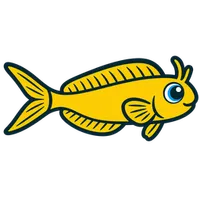
The midas blenny (Ecsenius midas) is the blenny that thinks it's a fairy wrasse — a sleek golden fish that abandons the usual rock-perching and swims out in open water, often shoaling alongside the anthias or chromis it mimics. It's peaceful, reef-safe and a wonderful splash of gold and movement, wanting a mature tank with open swimming room (and a lid — it can jump).
Care at a glance
| Adult size | ~4–5 in. |
|---|---|
| Minimum tank | A mature 30+ gallon tank with open water to swim and rock to retreat to. |
| Temperature | 75–82°F (24–28°C). |
| pH | 8.1–8.4. |
| Specific gravity | 1.023–1.026 (reef-standard ≈35 ppt). |
| Diet | Omnivore — grazes some algae but is more of a mid-water planktivore than other blennies; feed mysis, enriched brine and prepared foods along with algae. |
| Temperament | Peaceful and social — swims in the open like a wrasse; generally good with other fish, though still best as the only blenny. |
| Reef-safe | Yes — reef-safe; it rarely bothers corals (more planktivore than coral-grazer). |
| Natural range | Indo-Pacific. |

The fish store gets these wrong
Common myths, kindly corrected — no shame for having believed them.
- "Blennies just perch and eat algae." The midas breaks the mould — it swims in open water and feeds largely on plankton, so it needs meaty foods in the water column, not just algae.
- "It's reef-safe so it eats my algae problem." It's reef-safe, but it's a poor algae-scraper compared to a tailspot — buy it for its beauty and behaviour, not as an algae fix.
Before you buy
- A mature tank with open swimming water.
- Meaty foods (it's a planktivore) — not just algae.
- A lid (it can jump); one blenny per tank; quarantine before adding.
Quarantine and get help if…
We can't diagnose from a photo — but these are the signs to stop watching, quarantine, and get an aquatic vet or an experienced reefer's eyes on it:
- White spots, flashing or rapid breathing — quarantine and treat.
- Hiding in the rock and not swimming out, or not eating — stress or illness.
- Clamped fins or cloudy eyes — a water-quality problem.
Print the Midas Blenny emergency vet-prep card — what to bring, what to tell the vet, and the questions to ask.
Never
- Never rely on algae alone to feed it — it needs meaty/planktonic foods.
- Never run an open-topped tank — it can jump.
- Never keep it with another blenny in a small tank.
Common midas blenny questions
Is the midas blenny reef-safe?
Yes — it's a reef-safe, largely planktivorous blenny that swims in open water and rarely bothers corals. It's one of the safest and most beautiful blennies for a reef.
What do midas blennies eat?
More like a planktivore than a typical algae-grazing blenny — feed meaty foods such as mysis and enriched brine along with some algae. Don't rely on tank algae alone to sustain it.
Why does my midas blenny swim in open water instead of perching?
That's its charm — the midas mimics and shoals with open-water fish like anthias and chromis, so swimming out in the water column is completely normal (and why it's called the "crown jewel" blenny).
How big do midas blennies get and what tank do they need?
Around 4–5 inches, so a mature tank of at least 30 gallons with open swimming water and rock to retreat into suits them.
Do midas blennies jump?
They can — like other active open-water fish, so a lid is wise. Keep them as the only blenny, since they're still territorial toward their own kind.
🐚 Did you know? — Midas Blenny fun facts
Little true delights about the midas blenny — each one checked against a named source, no reef-store folklore.
- The Midas blenny is named after King Midas of Greek myth, who turned everything he touched to gold, a nod to its glowing golden-orange colour. Wikipedia
- This clever blenny can shift its colouring to match the fish it swims among, and is often seen mingling with schools of lyretail anthias. Wikipedia
- Unlike most reef blennies that graze algae from rocks, the Midas blenny is a planktivore that darts out into open water to snatch drifting plankton. Wikipedia
Sources & further reading
This guide was written and fact-checked against these authorities. It's honest, general guidance — not a diagnosis, and not a substitute for an aquatic vet or your own test kit:
- ReefBay — Complete Blenny Care Guide — planktivore diet, tank, reef-safe
- AquariumStoreDepot — Types of Blennies — open-water behaviour, care
Written and fact-checked by The Coralkin Team against marine-aquarist and veterinary sources — if your midas blenny shows a red-flag sign above, quarantine and get an aquatic vet or an experienced reefer's eyes on it. We never guess a care number.
🔬 Review status: team-written and fact-checked against cited sources · not yet reviewed by a marine vet. How we research & fact-check →
Get the free Midas Blenny Starter Kit
A readiness checklist and a first-30-days plan to set up your midas blenny the right way — every number drawn straight from our fact-checked care sheet. Join the shoal and we’ll send it over.
Honest reef care straight to your inbox. No spam — unsubscribe anytime. See how we handle your data in our privacy notice.