
Livestock · Tangs & Surgeonfish
Kole Tang
Ctenochaetus strigosus
The bristletooth "cleaner" tang — mows film algae and detritus, and fits a mid-size reef.
Difficulty: Intermediate Tang / surgeonfish Reef-safe
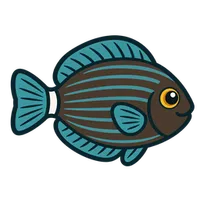
The kole tang (Ctenochaetus strigosus) — the yellow-eye or bristletooth tang — is the reef's workhorse "cleaner" tang. Instead of the scissor-teeth of other tangs, it has comb-like bristle teeth it uses to rasp film algae, diatoms and detritus off the rock all day. That makes it gentler on prized macroalgae, genuinely useful, and one of the best tangs for a mid-sized reef.
Care at a glance
| Adult size | ~5–7 in. |
|---|---|
| Minimum tank | 70+ gallons with open swimming length and lots of live rock (100+ is better long-term). |
| Temperature | 75–82°F (24–28°C). |
| pH | 8.1–8.4. |
| Specific gravity | 1.023–1.026 (reef-standard ≈35 ppt). |
| Diet | Herbivore/detritivore — rasps film algae, diatoms and detritus off rock with its bristle teeth; supplement with nori and prepared herbivore foods. |
| Temperament | One of the more peaceful tangs toward non-tangs, but still territorial toward other tangs/surgeonfish — one tang per tank. Scalpel-sharp tail spine. |
| Reef-safe | Yes — it grazes algae and detritus, not corals (and, being a bristletooth, it's less likely to nibble prized macroalgae than the Zebrasoma tangs). |
| Natural range | Indo-Pacific / Hawaii. |

The fish store gets these wrong
Common myths, kindly corrected — no shame for having believed them.
- "All tangs need a huge tank." The kole is one of the more modest — 70+ gallons suits it, versus 90–180 for the bigger tangs. It's still not a nano fish, though.
- "Tangs eat all my algae, including the good stuff." The kole's bristle teeth target film algae and detritus, so it's gentler on prized macroalgae than the scissor-toothed tangs.
Before you buy
- A 70+ gallon tank with swimming length and lots of rock.
- Only one tang per tank; quarantine before adding (tangs are ich-prone).
- Nori/herbivore foods to supplement its grazing.
Quarantine and get help if…
We can't diagnose from a photo — but these are the signs to stop watching, quarantine, and get an aquatic vet or an experienced reefer's eyes on it:
- White spots (ich) — tangs are especially prone; quarantine and treat at the first sign.
- Rapid breathing, flashing, or a darkening/blotchy stress colour — a parasite or water-quality problem.
- Not eating, thinning, or hiding — stress, bullying or illness.
Print the Kole Tang emergency vet-prep card — what to bring, what to tell the vet, and the questions to ask.
Never
- Never keep two tangs in a normal tank (add together only in a large one).
- Never skip quarantine — tangs catch ich readily.
- Never handle it bare-handed near the tail — the spine cuts.
Common kole tang questions
What's the smallest tank for a kole tang?
Around 70 gallons with open swimming length — the kole is one of the more modest tangs, but it's still an active swimmer and not a nano fish. 100 gallons or more is better long-term.
Is the kole tang reef-safe?
Yes — it grazes film algae, diatoms and detritus off the rock rather than eating corals, and its bristle teeth make it gentler on prized macroalgae than the scissor-toothed tangs.
Is the kole tang a good algae eater?
One of the best "cleaner" tangs — it works film algae, diatoms and detritus tirelessly. It's less effective on long hair algae than a Zebrasoma, but far better on the film and detritus that coat rock and glass.
Can I keep a kole tang with another tang?
Only in a large tank, and ideally added at the same time — tangs are territorial toward other tangs and surgeonfish. In a normal-sized tank, keep one tang.
Do kole tangs get ich?
Yes — like all tangs they're prone to marine ich, so quarantine before adding, keep water stable, and act fast at the first white spots. A well-fed kole in a stable tank is fairly hardy for a tang.
🐚 Did you know? — Kole Tang fun facts
Little true delights about the kole tang — each one checked against a named source, no reef-store folklore.
- The kole tang is found nowhere else on Earth but the Hawaiian Islands and nearby Johnston Atoll. Wikipedia
- It feeds by whisking dozens of fine, comb-like teeth over the reef and sweeping up detritus as it closes its mouth, earning the nickname 'bristletooth'. FishBase
- Its genus name Ctenochaetus comes from the Greek for 'comb' and 'hair', a direct reference to those distinctive bristle-like teeth. FishBase
Sources & further reading
This guide was written and fact-checked against these authorities. It's honest, general guidance — not a diagnosis, and not a substitute for an aquatic vet or your own test kit:
- Saltwater Aquarium Blog — Kole Tang — tank, diet, temperament
- Reef Builders — The Kole Tang — bristletooth grazing, medium-tank tang
- Fishlore — Kole Tang Care — size, tank, reef-safe
Written and fact-checked by The Coralkin Team against marine-aquarist and veterinary sources — if your kole tang shows a red-flag sign above, quarantine and get an aquatic vet or an experienced reefer's eyes on it. We never guess a care number.
🔬 Review status: team-written and fact-checked against cited sources · not yet reviewed by a marine vet. How we research & fact-check →
Get the free Kole Tang Starter Kit
A readiness checklist and a first-30-days plan to set up your kole tang the right way — every number drawn straight from our fact-checked care sheet. Join the shoal and we’ll send it over.
Honest reef care straight to your inbox. No spam — unsubscribe anytime. See how we handle your data in our privacy notice.