
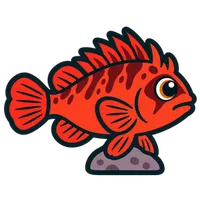
The flame hawkfish (Neocirrhites armatus) is a pocket-sized character — a brilliant scarlet fish with no swim bladder that perches on the rocks and corals, propped on its fins, watching the tank like a little hawk. It's hardy, bold and endlessly entertaining. The one caveat is in its diet: it hunts small shrimp and crabs, so it's reef-safe with corals but a threat to a delicate cleanup crew.
Care at a glance
| Adult size | ~3–4 in. |
|---|---|
| Minimum tank | A 30+ gallon tank with lots of rockwork and perches. |
| Temperature | 75–82°F (24–28°C). |
| pH | 8.1–8.4. |
| Specific gravity | 1.023–1.026 (reef-standard ≈35 ppt). |
| Diet | Carnivore — meaty foods (mysis, chopped seafood, pellets); in the tank it also hunts small ornamental shrimp, small crabs and feather-duster worms. |
| Temperament | Bold and characterful; generally peaceful to similar-sized fish but can be territorial. A jumper. Keep one hawkfish. |
| Reef-safe | Reef-safe with corals (it doesn't eat coral, though it may perch on and irritate them) — but it eats small shrimp and crabs, so not invert-safe. |
| Natural range | Pacific. |

The fish store gets these wrong
Common myths, kindly corrected — no shame for having believed them.
- "Reef-safe means safe with everything." It's reef-safe with corals, but it's a predator of small shrimp and crabs — not invert-safe. Big shrimp usually survive; small ones don't.
- "It needs a swim bladder to rest." It has none — perching on the rocks and corals is completely normal hawkfish behaviour, not a sign of illness.
Before you buy
- A cleanup crew that can live with it — large shrimp only (small shrimp/crabs are prey).
- A tight lid — hawkfish jump.
- Lots of perches and rockwork; one hawkfish per tank.
- Quarantine before adding.
Quarantine and get help if…
We can't diagnose from a photo — but these are the signs to stop watching, quarantine, and get an aquatic vet or an experienced reefer's eyes on it:
- White spots, flashing or rapid breathing — quarantine and treat.
- Not perching/hunting as usual, hiding, or not eating — stress or illness.
- Clamped fins or cloudy eyes — a water-quality or parasite problem.
Print the Flame Hawkfish emergency vet-prep card — what to bring, what to tell the vet, and the questions to ask.
Never
- Never keep it with small ornamental shrimp or small crabs — it eats them.
- Never run an open-topped tank — it jumps.
- Never keep two hawkfish in a normal tank (territorial).
Common flame hawkfish questions
Is the flame hawkfish reef-safe?
Reef-safe with corals — it won't eat them (though it may perch on and briefly annoy them). But it's not invert-safe: it hunts small ornamental shrimp (cleaner, peppermint), small crabs and feather-duster worms. Large shrimp like coral banded, fire and pistol shrimp usually live alongside it.
Why does my flame hawkfish sit on the rocks instead of swimming?
That's normal — hawkfish have no swim bladder, so they perch on rocks and corals propped on their pectoral fins, watching for food. It's characteristic behaviour, not a health problem.
Do flame hawkfish jump?
Yes — they're jumpers, so a tight-fitting lid is important. An open top is a common way to lose one.
Can I keep a flame hawkfish with cleaner shrimp?
Risky — it will often hunt and eat cleaner and peppermint shrimp, especially smaller ones. If you want shrimp, choose large ones (coral banded, fire, pistol) and add them, well-established, before the hawkfish.
How big do flame hawkfish get and what tank do they need?
Around 3–4 inches, so a 30-gallon-plus tank with plenty of rockwork to perch on suits them. Keep just one per tank.
🐚 Did you know? — Flame Hawkfish fun facts
Little true delights about the flame hawkfish — each one checked against a named source, no reef-store folklore.
- The flame hawkfish has no swim bladder, so instead of floating it props itself up on its sturdy pelvic fins and perches among coral branches like a hawk on a lookout. Wikipedia
- It loves to hide among live branching corals such as Stylophora and Pocillopora, darting deep into the branches if anything approaches. Wikipedia
- Flame hawkfish pair up faithfully, breeding in monogamous pairs as pelagic spawners. Wikipedia
Sources & further reading
This guide was written and fact-checked against these authorities. It's honest, general guidance — not a diagnosis, and not a substitute for an aquatic vet or your own test kit:
- Top Shelf Aquatics — Flame Hawkfish Care Guide — reef-safety, shrimp predation, perching
- Build Your Aquarium — Hawkfish Care — diet, tank mates, care
- reefs.com — Flame Hawkfish — behaviour, care
Written and fact-checked by The Coralkin Team against marine-aquarist and veterinary sources — if your flame hawkfish shows a red-flag sign above, quarantine and get an aquatic vet or an experienced reefer's eyes on it. We never guess a care number.
🔬 Review status: team-written and fact-checked against cited sources · not yet reviewed by a marine vet. How we research & fact-check →
Get the free Flame Hawkfish Starter Kit
A readiness checklist and a first-30-days plan to set up your flame hawkfish the right way — every number drawn straight from our fact-checked care sheet. Join the shoal and we’ll send it over.
Honest reef care straight to your inbox. No spam — unsubscribe anytime. See how we handle your data in our privacy notice.