
Flame Angelfish
Centropyge loricula
The dazzling flame-red centrepiece dwarf angel — reef-safe with caution around clams and LPS.
Difficulty: Intermediate Reef-safe community fish
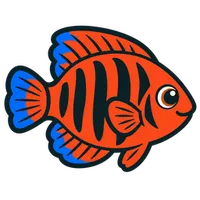
The flame angel (Centropyge loricula) is the showpiece dwarf angel — blazing red-orange with black bars and blue-tipped fins, bold enough to headline a tank. It's a touch more demanding than the coral beauty (shyer to settle, and it wants pristine, mature water), and it carries the same "reef-safe with caution" gamble around clams and fleshy LPS.
Care at a glance
| Adult size | ~4 in (10 cm). |
|---|---|
| Lifespan | Often 5–10 years in a well-kept reef. |
| Minimum tank | A mature 70+ gallon tank with abundant live rock. |
| Temperature | 75–82°F (24–28°C). |
| pH | 8.1–8.4. |
| Specific gravity | 1.023–1.026 (reef-standard ≈35 ppt). |
| Diet | Omnivore — grazes algae and microfauna off live rock, plus prepared angel/herbivore foods and mysis. |
| Temperament | Peaceful-to-feisty; safe with motile inverts (shrimp, crabs, snails) but territorial toward other dwarf angels. One per tank. |
| Reef-safe | Reef-safe with caution — safe with motile inverts, but its behaviour toward clams and fleshy LPS is individual; be especially careful with clams. |
| Natural range | Pacific. |

The fish store gets these wrong
Common myths, kindly corrected — no shame for having believed them.
- "Flame and coral beauty can share a tank." Only in a large system (125 gal+), added together — otherwise they fight over territory, usually fatally.
- "It's guaranteed reef-safe." Reef-safe with caution — watch it around clams and fleshy LPS, and keep it fed.
Before you buy
- A mature 70+ gal tank with lots of live rock.
- Only one dwarf angel per tank.
- Pristine, stable water and a calm intro (it can sulk at first).
- Quarantine before adding.
Quarantine and get help if…
We can't diagnose from a photo — but these are the signs to stop watching, quarantine, and get an aquatic vet or an experienced reefer's eyes on it:
- White spots (ich) or fast, laboured gilling — quarantine and treat.
- Hiding and refusing food beyond the first settling-in days — stress, bullying, or illness.
- Flashing, clamped fins, or cloudy eyes — a parasite or water-quality problem.
Print the Flame Angelfish emergency vet-prep card — what to bring, what to tell the vet, and the questions to ask.
Never
- Never keep two dwarf angels in a normal tank.
- Never add one to an immature, algae-poor tank.
- Never skip quarantine.
Common flame angelfish questions
Is the flame angelfish reef-safe?
Reef-safe with caution. It's safe with motile inverts like shrimp and snails, but whether it leaves clams and fleshy LPS alone comes down to the individual fish. Keep it well fed and be especially watchful if you keep clams.
Coral beauty or flame angel — which is easier?
The coral beauty is a touch hardier and bolder; the flame angel is showier but slightly more demanding and can be shy settling in. Both need a mature 70-gallon-plus tank, both are reef-safe-with-caution, and both are one-per-tank.
How big a tank does a flame angel need?
A mature tank of at least 70 gallons with plenty of live rock to graze — it's a small fish, but it needs an established system and swimming/grazing room.
Can I keep two flame angels?
Not in a typical tank — they're territorial toward their own kind and other dwarf angels. It only works in a large system with both added simultaneously.
Why won't my new flame angel eat?
New flame angels are often shy for the first days — dim the lights, offer enriched mysis and angel foods, and make sure it isn't being bullied. Persistent refusal to eat after acclimation warrants a closer look at water quality and health.
🐚 Did you know? — Flame Angelfish fun facts
Little true delights about the flame angelfish — each one checked against a named source, no reef-store folklore.
- Flame angelfish live in harems and are broadcast spawners, rising together into the water column at dusk to release their eggs and sperm all at once. Wikipedia
- You can often tell the males apart because they carry more blue along the outer edges of the dorsal and anal fins and tend to be the larger fish. Wikipedia
- Flame angelfish from the Marquesas Islands are a little different from the rest, lacking the vertical black bars that mark the species elsewhere. Wikipedia
Sources & further reading
This guide was written and fact-checked against these authorities. It's honest, general guidance — not a diagnosis, and not a substitute for an aquatic vet or your own test kit:
- Saltwater Aquarium Blog — Flame Angelfish Care — tank, reef-safety, temperament
- Aquarium Specialty — Flame Angel Care Guide — reef-safe caution, care
- Fish Stores — Flame Angelfish Care — size, diet, reef safety
Written and fact-checked by The Coralkin Team against marine-aquarist and veterinary sources — if your flame angelfish shows a red-flag sign above, quarantine and get an aquatic vet or an experienced reefer's eyes on it. We never guess a care number.
🔬 Review status: team-written and fact-checked against cited sources · not yet reviewed by a marine vet. How we research & fact-check →
Get the free Flame Angelfish Starter Kit
A readiness checklist and a first-30-days plan to set up your flame angelfish the right way — every number drawn straight from our fact-checked care sheet. Join the shoal and we’ll send it over.
Honest reef care straight to your inbox. No spam — unsubscribe anytime. See how we handle your data in our privacy notice.