
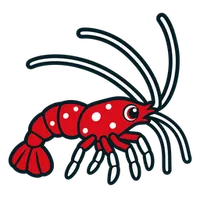
The fire shrimp (Lysmata debelius) — also sold as the blood or scarlet cleaner shrimp — is one of the most beautiful animals in the hobby: deep blood-red with white antennae and legs. It's a hardy cleaner shrimp that sets up cleaning stations for fish, and its only real quirk is shyness — it wants a shaded overhang to call home and comes out to work from there.
Care at a glance
| Adult size | Around 2 in. |
|---|---|
| Minimum tank | 20 gallons and up; one, or a bonded pair. |
| Temperature | 75–82°F (24–28°C). |
| pH | 8.1–8.4. |
| Specific gravity | 1.023–1.026 (reef-standard ≈35 ppt). |
| Other targets | Standard reef calcium and alkalinity support healthy moulting; like all inverts it has zero tolerance for copper. |
| Diet | Omnivore — cleans parasites and dead tissue off fish, scavenges detritus, and takes most meaty foods (mysis, pellets). |
| Temperament | Peaceful and low-aggression, but shy and nocturnal, preferring shaded caves. Best kept singly or as a bonded pair. |
| Reef-safe | Mostly — reef-safe in general, but it has been reported to occasionally nip LPS/SPS coral polyps; keep it well fed. |
| Natural range | Indo-Pacific. |

The fish store gets these wrong
Common myths, kindly corrected — no shame for having believed them.
- "The shrimp died — there's its body." Almost always a moult — Lysmata shed a clear exoskeleton regularly. The live shrimp is hiding while its new shell hardens.
- "Fire shrimp are 100% reef-safe." Largely, but they've been reported to nip LPS/SPS polyps occasionally — keep them fed.
- "It's hiding because it's unhappy." Fire shrimp are naturally shy and nocturnal; give it a shaded cave and it'll come out to clean.
Before you buy
- A shaded overhang or cave for it to claim — key to actually seeing it.
- A stable, cycled tank; drip-acclimate over an hour+; never any copper.
- A plan for one shrimp or a bonded pair; keep it fed so it leaves corals alone.
Signs something's wrong
A struggling invert is usually telling you about water quality, acclimation, or (for shrimp and crabs) a fresh moult — here's what to watch for:
- Lying on its side and NOT a shed shell — check salinity and for copper.
- Nipping coral polyps — usually underfed; feed more.
- Failed moult or missing limbs — a chemistry or nutrition issue.
Work through the Fire Shrimp trouble card — the water, light, flow and pest checks that fix almost every struggling invert.
Never
- Never dose copper with shrimp in the tank.
- Never keep it without a shaded hideout — it'll hide constantly.
- Never drop it straight in — drip-acclimate; never bin a "body" that's actually a moult.
Common fire shrimp questions
Are fire shrimp reef-safe?
Largely yes — they're peaceful cleaner shrimp that service fish and scavenge. The honest caveat is that, like some other Lysmata, they've been reported to occasionally nip LPS or SPS polyps, so keep them well fed.
Why does my fire shrimp always hide?
They're naturally shy and nocturnal. Give one a shaded overhang or cave to claim and it will settle in and come out to clean from its base — a fire shrimp with no hideout hides all the time.
Is my fire shrimp dead — I found its shell?
Almost certainly a moult. Fire shrimp shed a complete, clear exoskeleton regularly, and it looks just like a dead shrimp; the live one is nearby while its new shell hardens.
Can I keep more than one fire shrimp?
A single shrimp or a bonded pair is safest. Like other Lysmata they can be aggressive to each other crowded into a small tank, so give a group space.
Do fire shrimp clean fish like skunk cleaners?
Yes — they set up cleaning stations and pick parasites and dead tissue off willing fish, the same as the skunk cleaner shrimp.
🐚 Did you know? — Fire Shrimp fun facts
Little true delights about the fire shrimp — each one checked against a named source, no reef-store folklore.
- Fire shrimp are simultaneous hermaphrodites, so every mature individual carries both male and female roles at once, meaning any two of them can pair up and breed. Wikipedia
- This brilliant red shrimp is a cleaner, waving its conspicuous white antennae to invite passing fish over for a grooming session. Wikipedia
- The fire shrimp's scientific name, debelius, honours Helmut Debelius, the naturalist who collected the first specimens and sent them off to be identified. Wikipedia
Sources & further reading
This guide was written and fact-checked against these authorities. It's honest, general guidance — not a diagnosis, and not a substitute for an aquatic vet or your own test kit:
- Saltwater Aquarium Blog — Best Reef Safe Shrimp — reef-safe, cleaning, coral-nipping caveat
- Fish Laboratory — Fire Shrimp Care — size, shy/nocturnal, tank
- Fishlore — Red Fire Shrimp Care — care, temperament, diet
Written and fact-checked by The Coralkin Team against marine-aquarist sources — if your fire shrimp is struggling, it's almost always water quality, acclimation or a moult — check those first and ask an experienced reefer. We never guess a care number.
🔬 Review status: team-written and fact-checked against cited sources · not yet reviewed by a marine vet. How we research & fact-check →
Get the free Fire Shrimp Starter Kit
A readiness checklist and a first-30-days plan to set up your fire shrimp the right way — every number drawn straight from our fact-checked care sheet. Join the shoal and we’ll send it over.
Honest reef care straight to your inbox. No spam — unsubscribe anytime. See how we handle your data in our privacy notice.