
Candy Cane Coral
Caulastrea furcata
The candy-striped starter LPS — hardy, peaceful, and it buds into more heads the more you feed it.
Difficulty: Beginner LPS coral
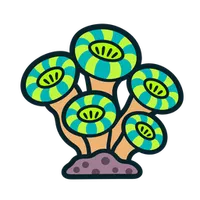
The candy cane coral (Caulastrea furcata) — also called trumpet or bullseye coral — is one of the best first LPS: hardy, peaceful, and made of glowing striped heads on branching stalks that bud into more heads the more you feed it. Low-to-moderate light, gentle flow, a spot on the lower rock or sand, and a couple of feeds a week turn one frag into a showpiece colony.
Care at a glance
| Colony / form | Branching stalks, each topped by a round striped head; multiplies by budding new heads. |
|---|---|
| Lighting | Low to moderate — around 50–70 PAR (30–150 acceptable). Not a bright-light coral. |
| Water flow | Low to moderate, indirect — enough to keep detritus off, not enough to stop the heads inflating. |
| Placement | Lower rock or the sand bed; give the heads room to inflate and to add new ones. |
| Temperature | 75–82°F (24–28°C). |
| pH | 8.1–8.4. |
| Specific gravity | 1.023–1.026 (reef-standard ≈35 ppt). |
| Other targets | LPS build a stony skeleton — keep alkalinity (≈8–11 dKH), calcium (≈400–450 ppm) and magnesium (≈1300–1450 ppm) stable. |
| Feeding | Photosynthetic PLUS meaty spot-feeding (mysis, small pieces) 2–3× a week — it feeds at night, and feeding drives new heads. |
| Growth & spread | Steady — buds new heads and fills out into a dense colony; easy to frag. |
| Natural range | Indo-Pacific. |
The fish store gets these wrong
Common myths, kindly corrected — no shame for having believed them.
- "LPS all need bright light." Candy cane is a low-to-moderate-light coral — too much light can bleach it. Keep it lower and shadier.
- "You don't need to feed photosynthetic corals." Candy cane grows far faster and buds more heads when spot-fed — feeding is how you turn a frag into a colony.
Before you buy
- A low-to-moderate-light, gentle-flow spot on lower rock or sand.
- Stable alk/Ca/Mg (it's a stony coral).
- Meaty foods to spot-feed a couple of times a week.
Signs something's wrong
A struggling coral is almost always telling you about light, flow or water — here's what to watch for:
- Heads not inflating — usually too much flow, or a parameter issue.
- Receding tissue or exposed skeleton between heads — a chemistry swing or a brown-jelly-type infection; check water.
- Pale or bleaching — too much light.
Work through the Candy Cane Coral trouble card — the water, light, flow and pest checks that fix almost every struggling coral.
Never
- Never keep it under intense light or strong flow — the heads won't inflate.
- Never let alkalinity swing (it's a stony coral).
- Never skip feeding if you want it to multiply.
Common candy cane coral questions
Is candy cane coral good for beginners?
Yes — it's one of the best first LPS corals: hardy, peaceful, undemanding on light and flow, and very responsive to feeding. Give it low-to-moderate light, gentle flow and stable parameters.
How do I get my candy cane to grow more heads?
Feed it. Candy cane is photosynthetic but buds new heads much faster when spot-fed meaty foods (mysis, small pieces) two or three times a week — that's how a small frag becomes a full colony.
How much light and flow does candy cane need?
Low to moderate light (around 50–70 PAR) and gentle, indirect flow. Too much of either stops the heads inflating, and strong light can bleach it.
Where should I place candy cane coral?
Low in the tank — on lower rock or the sand bed — in a calm, lower-light, gentle-flow spot, with room for the heads to inflate and for new ones to bud.
Is candy cane coral aggressive to other corals?
It's one of the more peaceful LPS — it doesn't have the long stinging sweeper tentacles of Euphyllia — so it's an easy neighbour, though it's still wise to leave a little space as it spreads.
🐚 Did you know? — Candy Cane Coral fun facts
Little true delights about the candy cane coral — each one checked against a named source, no reef-store folklore.
Sources & further reading
This guide was written and fact-checked against these authorities. It's honest, general guidance — not a diagnosis, and not a substitute for an aquatic vet or your own test kit:
- Saltwater Aquarium Blog — Candy Cane Coral — placement, feeding, light/flow
- Fish Laboratory — Candy Cane Coral Care — PAR, care, growth
- Extreme Corals — Candy Cane Coral Care Guide — lighting, feeding, growth
Written and fact-checked by The Coralkin Team against marine-aquarist sources — if your candy cane coral is struggling, it's almost always a light, flow or water-chemistry issue — check those first and ask an experienced reefer. We never guess a care number.
🔬 Review status: team-written and fact-checked against cited sources · not yet reviewed by a marine vet. How we research & fact-check →
Get the free Candy Cane Coral Starter Kit
A readiness checklist and a first-30-days plan to set up your candy cane coral the right way — every number drawn straight from our fact-checked care sheet. Join the shoal and we’ll send it over.
Honest reef care straight to your inbox. No spam — unsubscribe anytime. See how we handle your data in our privacy notice.