
Livestock · Tangs & Surgeonfish
Blue Tang
Paracanthurus hepatus
"Dory" — stunning, but grows big and needs a large, mature tank (not a beginner fish).
Difficulty: Advanced Tang / surgeonfish Reef-safe
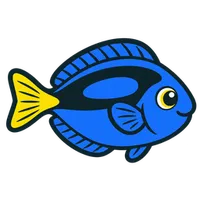
The blue tang (Paracanthurus hepatus) — “Dory” — is one of the most beautiful reef fish there is, and one of the most mis-sold. It reaches a full foot long, needs a very large tank with real swimming length, is exceptionally prone to ich, and is almost always wild-caught. It's a rewarding fish for an experienced keeper with the right setup — and a heartbreak as an impulse buy. Please don't buy one for a small tank.
Care at a glance
| Adult size | Large — up to 12 in (30.5 cm); commonly 8–10 in in the aquarium. |
|---|---|
| Minimum tank | Very large — 100 gallons at the bare minimum, and 180+ for an adult, with about 6 ft of open swimming length. This is a big-tank, experienced-keeper fish — not a starter or nano fish. |
| Temperature | 75–82°F (24–28°C). |
| pH | 8.1–8.4. |
| Specific gravity | 1.020–1.026 (≈35 ppt; keep it stable). |
| Other targets | High oxygenation, strong flow, low nitrate, and lots of open swimming space; keep the water pristine. |
| Diet | Herbivore-leaning — needs marine algae/nori as a staple (vital for health and immune strength), plus some meaty foods (mysis) and vitamin/amino supplements. Feed generously and often. |
| Temperament | Generally peaceful toward non-tangs but territorial with other tangs. It's a nervous fish that hides in rockwork and may “play dead” on its side when stressed or new. Scalpel-sharp tail spine — handle with care. |
| Reef-safe | Yes — it grazes algae, not corals. |
| Natural range | Indo-Pacific reefs. |

The fish store gets these wrong
Common myths, kindly corrected — no shame for having believed them.
- “Dory is a small, easy fish.” No — the blue tang reaches a full foot and needs 100–180+ gallons with real swimming length. It's one of the more demanding reef fish, not a beginner pet.
- “Just add it to the display like any fish.” Please don't — blue tangs are the most ich- and velvet-prone tang in the hobby. Strict quarantine of every one is mandatory.
- “You can buy a captive-bred Dory.” Rarely — it was first bred in 2016, but captive-bred blue tangs aren't broadly available, so almost every one sold is wild-caught. Factor that into the decision.
Before you buy
- Have a very large, mature tank FIRST (100–180+ gal, ~6 ft length) — this is the whole decision.
- Set up serious quarantine — non-negotiable for the most ich-prone tang.
- Be honest that it's almost certainly wild-caught, and a years-long commitment.
- Have nori/algae and a varied diet ready; feed generously.
- Only one tang of this type per tank.
Quarantine and get help if…
We can't diagnose from a photo — but these are the signs to stop watching, quarantine, and get an aquatic vet or an experienced reefer's eyes on it:
- White salt-grain spots (marine ich — blue tangs are extremely prone), scratching/flashing, or a dusty velvet sheen with rapid breathing (velvet kills fast — act immediately).
- Clamped fins, hiding constantly, refusing food, or a thin/pinched body.
- “Playing dead” repeatedly, or laboured breathing — a stress or water-quality warning.
- Any blue tang added without quarantine — expect ich otherwise.
Print the Blue Tang emergency vet-prep card — what to bring, what to tell the vet, and the questions to ask.
Never
- Never buy a blue tang for a small or immature tank — it's the #1 impulse-buy mistake in the hobby.
- Never skip quarantine on a blue tang.
- Never rely on meaty foods alone — it needs algae.
- Never keep it with other tangs in an average tank.
- Never buy one on impulse because of the movie.
Common blue tang questions
How big does a blue tang (Dory) get, and what size tank does it need?
It reaches a full foot (about 12 inches) and needs a very large tank — 100 gallons at the bare minimum, 180+ for an adult, with roughly 6 feet of swimming length. It is not a nano, starter, or “small tank” fish.
Is the blue tang a good beginner fish?
No. Between its adult size, huge tank requirement, extreme ich-proneness, and the fact that it's almost always wild-caught, the blue tang is an advanced fish for experienced keepers with a large, mature system. It's the classic impulse-buy heartbreak.
Why do blue tangs always get ich?
Blue tangs are the most ich- and velvet-prone tang in the hobby. Strict quarantine of every new fish is mandatory, along with low stress (a big tank) and pristine water.
Can you buy a captive-bred blue tang?
Rarely. Blue tangs were first bred in captivity in 2016, but captive-bred specimens aren't broadly available — so nearly every “Dory” in the trade is wild-caught. That's an important part of the buying decision.
What do blue tangs eat?
They're herbivore-leaning — marine algae/nori is the staple (vital for their health), supplemented with some meaty foods like mysis and with vitamins/amino acids. Feed generously and often.
🐚 Did you know? — Blue Tang fun facts
Little true delights about the blue tang — each one checked against a named source, no reef-store folklore.
- The blue tang is the real-life species behind the character Dory in Pixar's Finding Nemo and Finding Dory. A-Z Animals
- Like other surgeonfishes, the blue tang carries a sharp scalpel-like spine on each side of its tail base that it uses for defence. A-Z Animals
- The blue tang is venomous, with a venom gland set in a glandular groove near its tail spine. FishBase
Sources & further reading
This guide was written and fact-checked against these authorities. It's honest, general guidance — not a diagnosis, and not a substitute for an aquatic vet or your own test kit:
- Saltwater Aquarium Blog — Blue Hippo Tang Care Guide — adult size, tank size, diet, temperament, reef-safe, ich susceptibility, captive-bred status
- Tropical Fish Hobbyist — Keeping the Real-Life Species from Finding Dory — the Dory impulse-buy/welfare context, husbandry, wild-caught reality
Written and fact-checked by The Coralkin Team against marine-aquarist and veterinary sources — if your blue tang shows a red-flag sign above, quarantine and get an aquatic vet or an experienced reefer's eyes on it. We never guess a care number.
🔬 Review status: team-written and fact-checked against cited sources · not yet reviewed by a marine vet. How we research & fact-check →
Get the free Blue Tang Starter Kit
A readiness checklist and a first-30-days plan to set up your blue tang the right way — every number drawn straight from our fact-checked care sheet. Join the shoal and we’ll send it over.
Honest reef care straight to your inbox. No spam — unsubscribe anytime. See how we handle your data in our privacy notice.