
Acan Coral
Micromussa lordhowensis
Jewel-toned fleshy polyps in every colour — collectible, hardy and easy to feed.
Difficulty: Beginner–Intermediate LPS coral
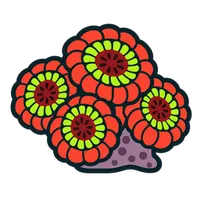
Acans (Micromussa lordhowensis, long known as Acanthastrea) are collectible, jewel-toned LPS — fleshy discs of polyps in almost every colour, prized and fragged like currency. They're hardy and easy to feed, want lower light and gentle flow, and have one caveat: sweeper tentacles that make them semi-aggressive to close neighbours.
Care at a glance
| Colony / form | Fleshy polyps packed into a colourful colony; grows outward polyp by polyp and is easy to frag. |
|---|---|
| Lighting | LOW — around 25–50 PAR. Acans are very light-responsive: colour shifts noticeably with light, and too much bleaches them. Keep them shaded/low. |
| Water flow | Moderate, not too strong — their flesh is delicate and tears/recedes in harsh flow. |
| Placement | Lower rock or the sand in a shaded, moderate-flow spot — and give it SPACE: acans have sweeper tentacles and can take feeding aggression out on close neighbours. |
| Temperature | 75–82°F (24–28°C). |
| pH | 8.1–8.4. |
| Specific gravity | 1.023–1.026 (reef-standard ≈35 ppt). |
| Other targets | LPS build a stony skeleton — keep alkalinity (≈8–11 dKH), calcium (≈400–450 ppm) and magnesium (≈1300–1450 ppm) stable. |
| Feeding | Loves meaty foods — small pieces of mysis, krill and the like (small mouths, so keep pieces small). Feeding drives both growth and colour. |
| Growth & spread | Steady; adds polyps outward. Highly collectible and easy to frag once established. |
| Natural range | Indo-Pacific, including Australian waters. |
The fish store gets these wrong
Common myths, kindly corrected — no shame for having believed them.
- “More light = better acan colour.” The opposite — acans are low-light corals (25–50 PAR); too much light bleaches them and washes out the very colours they're collected for. Keep them shaded and low.
- “Acans are totally peaceful because they're fleshy LPS.” Not quite — they're semi-aggressive, with sweeper tentacles and feeding aggression that can harm close neighbours. Give them space.
Before you buy
- Pick a LOW-light, shaded spot (25–50 PAR) — key to keeping their colour.
- Moderate (not strong) flow — their flesh is delicate.
- Leave space from neighbours (sweeper tentacles).
- Have small meaty foods ready — feeding drives colour and growth.
Signs something's wrong
A struggling coral is almost always telling you about light, flow or water — here's what to watch for:
- Fading or bleaching colour — almost always too much light; move it lower/shadier.
- Receding flesh or exposed skeleton — too much flow, a chemistry swing, or feeding aggression from a neighbour.
- Not opening / staying deflated — check flow (too strong?) and water stability.
Work through the Acan Coral trouble card — the water, light, flow and pest checks that fix almost every struggling coral.
Never
- Never keep acans in high light — it bleaches them and kills the colour.
- Never blast them with strong flow (delicate flesh).
- Never crowd them against other corals — the sweepers sting.
Common acan coral questions
Why is my acan coral losing its colour or bleaching?
Almost always too much light. Acans are low-light corals (around 25–50 PAR) and are very light-responsive — too much bleaches them and washes out the colours they're prized for. Move them lower and shadier.
How much light do acan corals need?
Low — around 25–50 PAR. They colour up best in shaded, lower-light spots; strong light bleaches them.
Do acan corals need to be fed?
They love it — offer small pieces of meaty food like mysis and krill (their mouths are small, so keep pieces small). Feeding drives both growth and their intense colour, on top of photosynthesis.
Are acan corals aggressive?
Semi-aggressive — they extend sweeper tentacles and can take feeding aggression out on close neighbours, so give them space from other corals.
Are acans (Acanthastrea) the same as Micromussa?
Yes — the coral long sold as Acanthastrea lordhowensis has been reclassified as Micromussa lordhowensis. "Acan" is still the common hobby name.
🐚 Did you know? — Acan Coral fun facts
Little true delights about the acan coral — each one checked against a named source, no reef-store folklore.
- The dazzling acan coral is often painted in two contrasting shades at once, mixing reds, oranges, purples, blues and greens on a single colony. Wikipedia
- Long known to hobbyists as the Acan Lord, this coral was reclassified by scientists in 2016 from the genus Acanthastrea into Micromussa. Wikipedia
- A single acan coral colony can spread into a low clump up to two metres across on shallow Indo-Pacific reefs. Wikipedia
Sources & further reading
This guide was written and fact-checked against these authorities. It's honest, general guidance — not a diagnosis, and not a substitute for an aquatic vet or your own test kit:
- Saltwater Aquarium Blog — Acan Coral Care Guide — placement, feeding, growth, aggression
- Tidal Gardens — Micromussa Coral Care — light/PAR, flow, feeding, taxonomy
- Bulk Reef Supply — How to Care for LPS Corals — LPS chemistry, feeding
Written and fact-checked by The Coralkin Team against marine-aquarist sources — if your acan coral is struggling, it's almost always a light, flow or water-chemistry issue — check those first and ask an experienced reefer. We never guess a care number.
🔬 Review status: team-written and fact-checked against cited sources · not yet reviewed by a marine vet. How we research & fact-check →
Get the free Acan Coral Starter Kit
A readiness checklist and a first-30-days plan to set up your acan coral the right way — every number drawn straight from our fact-checked care sheet. Join the shoal and we’ll send it over.
Honest reef care straight to your inbox. No spam — unsubscribe anytime. See how we handle your data in our privacy notice.